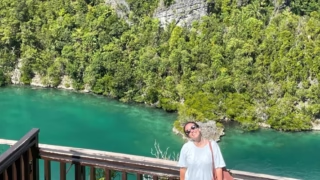
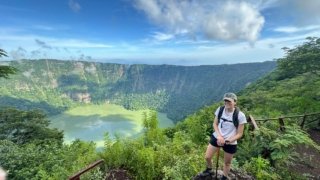
The Maribios mountain range in the west of the country, near the cities of León and Chinandega, is made up of a few volcanic lagoons, Asosoca and Monte Galán, and the following main volcanoes: San Cristóbal, El Chonco, Casita, Telica, Santa Clara, Rota, Cerro Negro, El Hoyo and Momotombo.
Cerro Negro Volcano

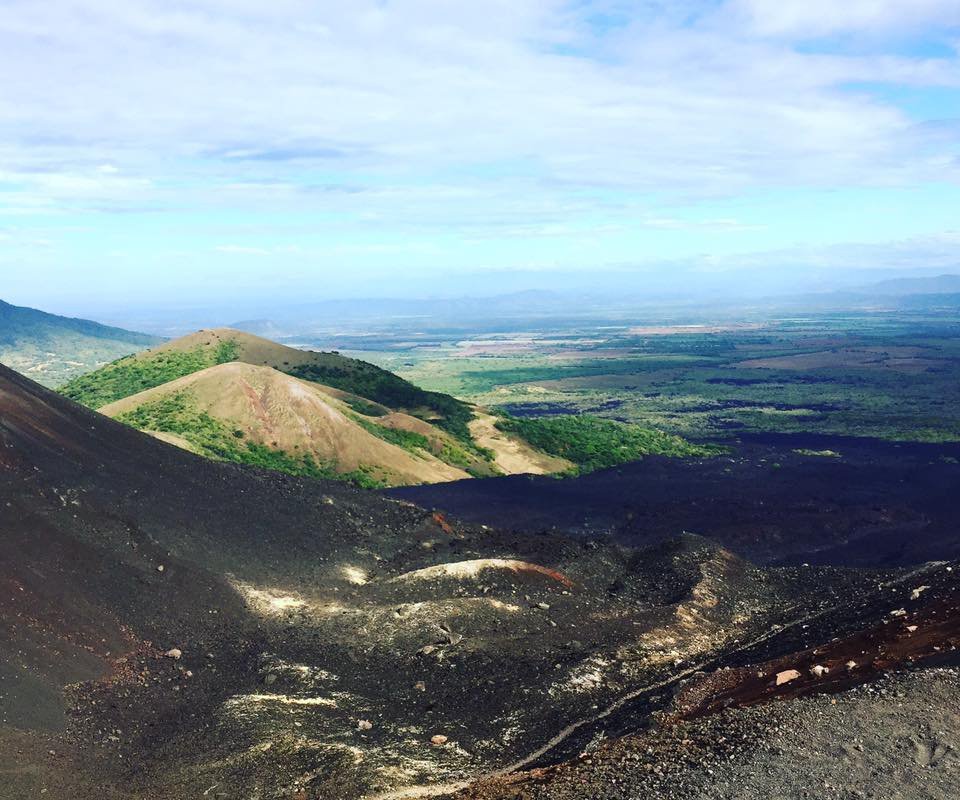

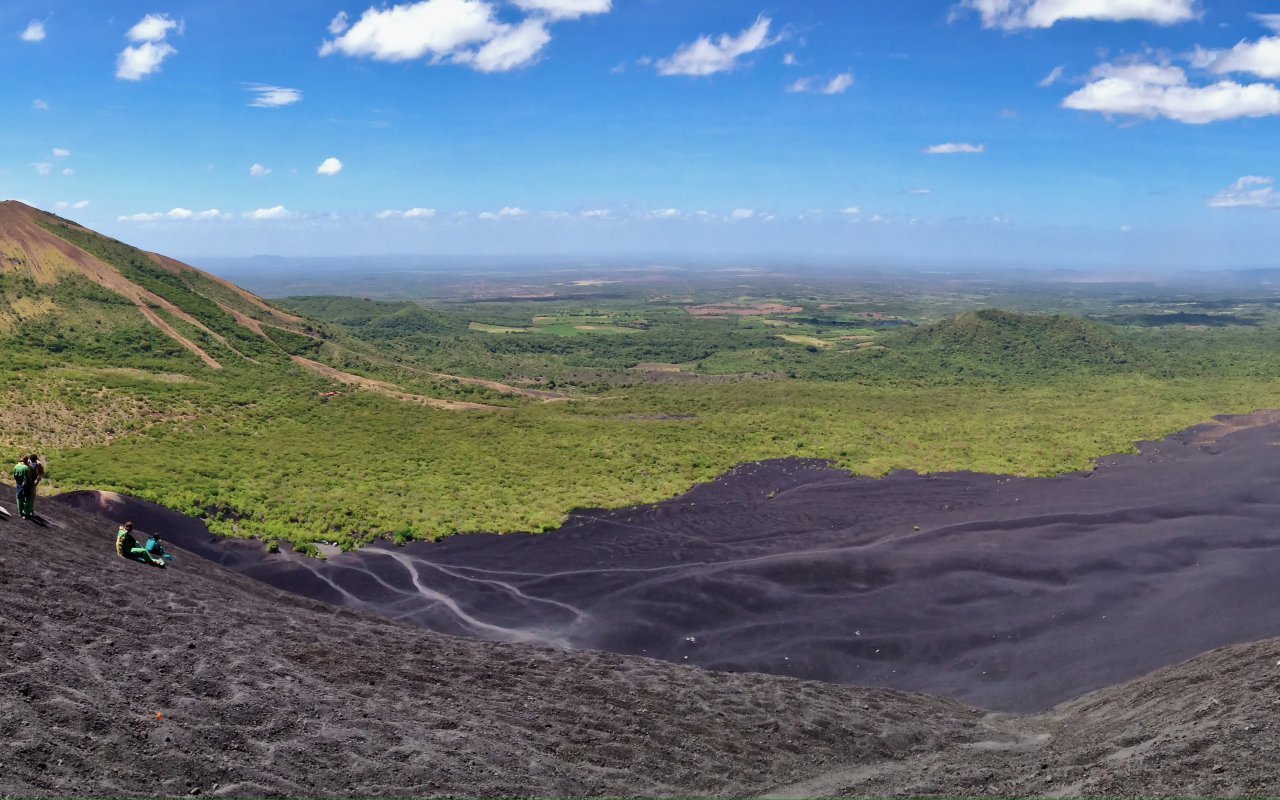
The black mountain, Cerro Negro is a unique and young volcano! Born just over 150 years ago, the Cerro Negro volcano is the most active volcano in Nicaragua. It has recorded some twenty eruptions, the most recent in 1999, when two small craters were formed.725 metres high, its slopes are fairly steep, devoid of vegetation– a striking contrast with its surroundings – and covered with a layer of ash and black volcanic rock, hence the name Cerro Negro, black hill.
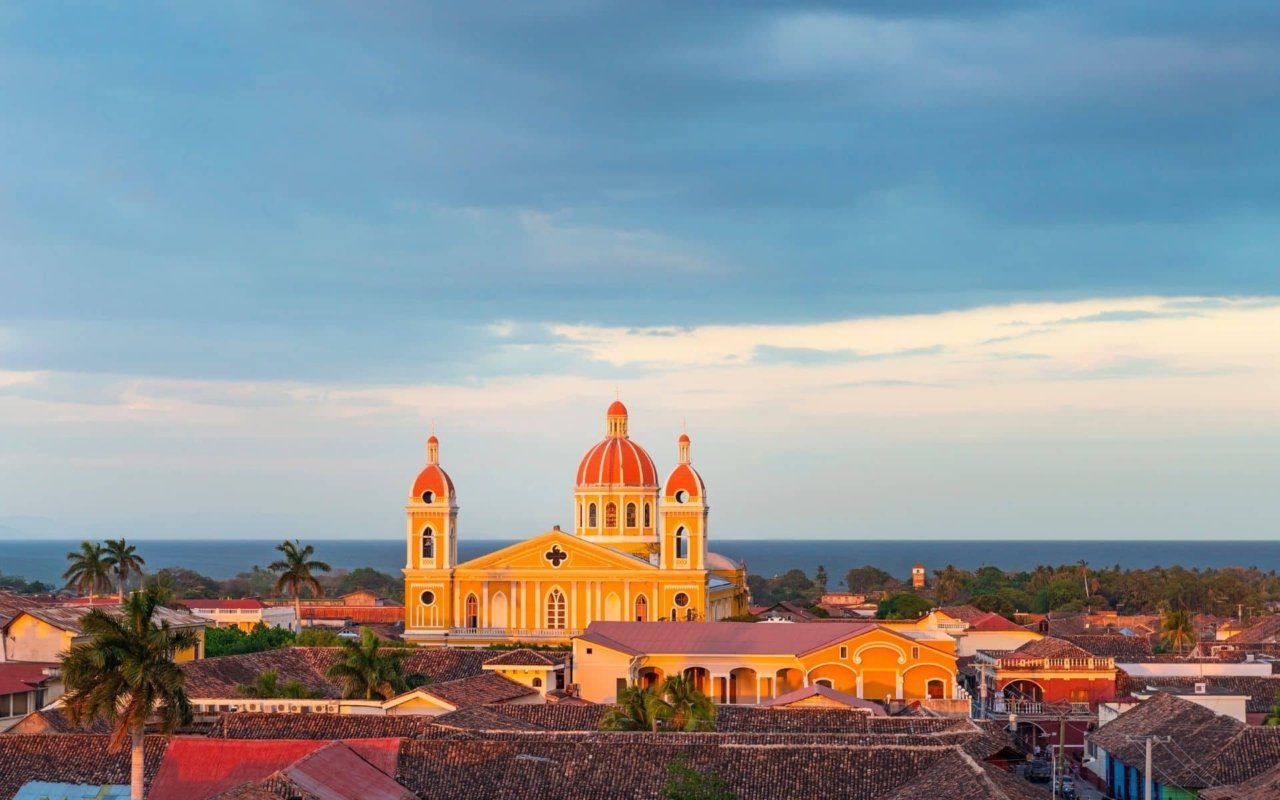
The climb is accessible to all. A clearly marked path of black volcanic rock leads up to the summit. It takes about an hour to reach the summit, from where you can observe the craters spewing out fumaroles and other sulphur emissions.The view from the top is magnificent. You can see its lunar-like surroundings, the panorama over the city of León and its beautiful white cathedral, the Basílica Catedral de la Asunción, as well as the volcanoes, such as Telica and San Cristóbal, of the Maribios volcanic chain, which crosses several Nicaraguan departments.

Volcano boarding down Cerro Negro
The descent is much easier than the ascent. It takes place on one of the steepest slopes where there is nothing but volcanic sand. You can choose between hiking trails or tobogganing down on a specially designed wooden board. Legend has it that a foreigner living in León came up with the idea with his coffee table. Speed and thrills guaranteed!
Since 2015, an 830-meter tree climbong course with 7 platforms and a 17-meter suspension bridge has been installed at the foot of Cerro Negro to take you directly to the nature reserve reception.
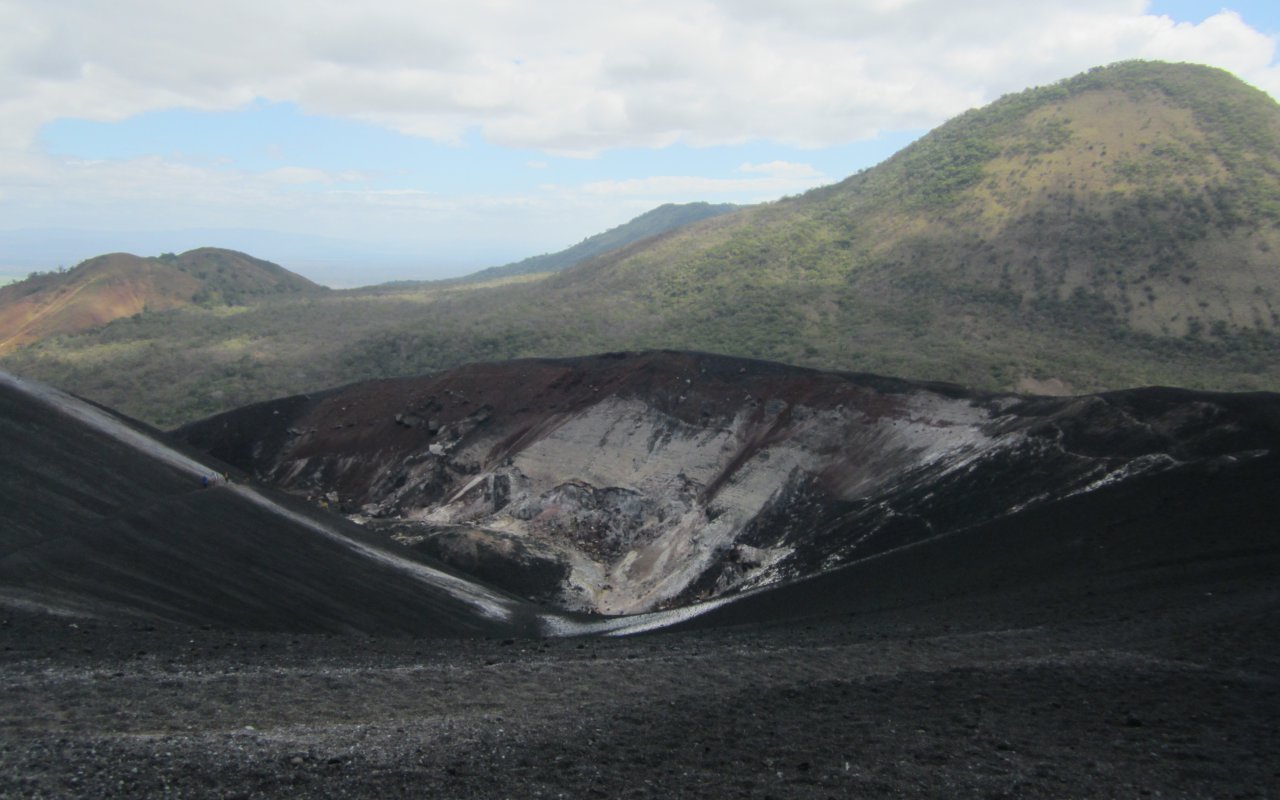
Itineraries to discover the volcanoes of Nicaragua
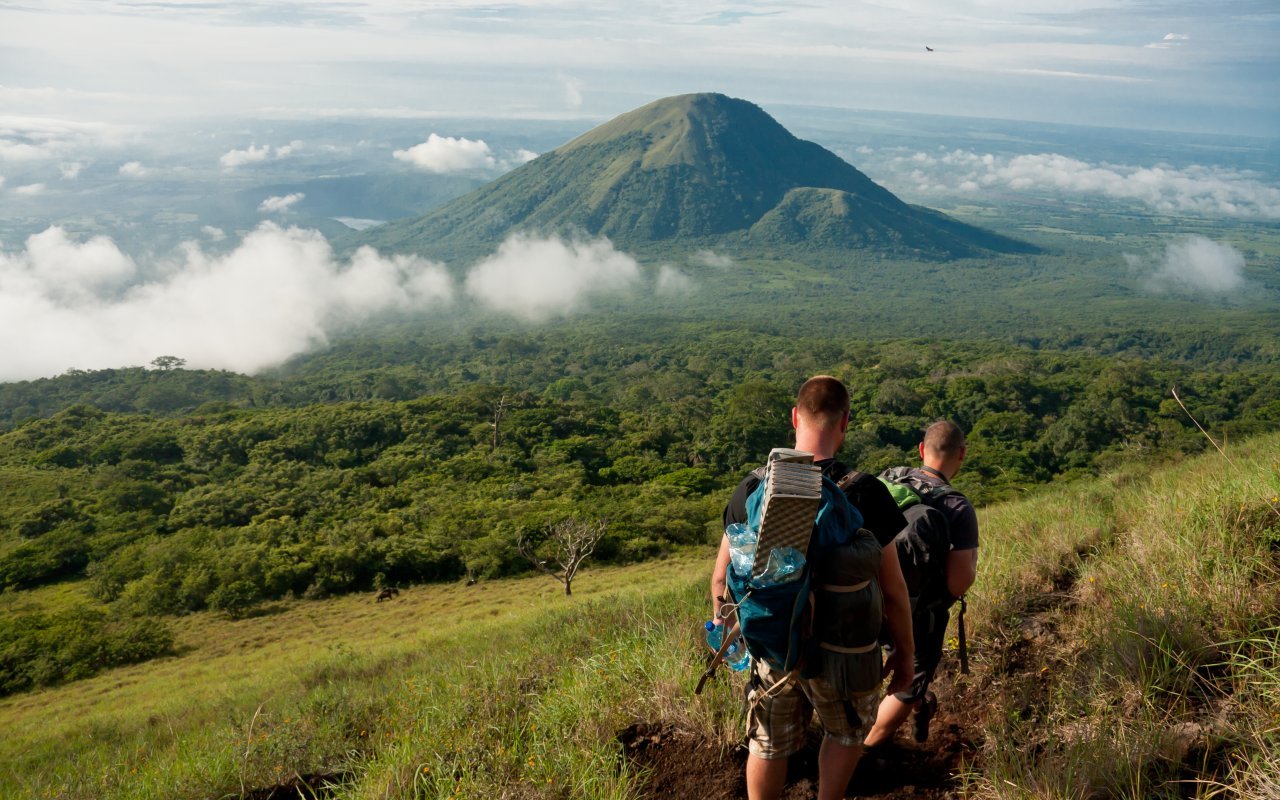
Trek and volcanoes tour in Nicaragua
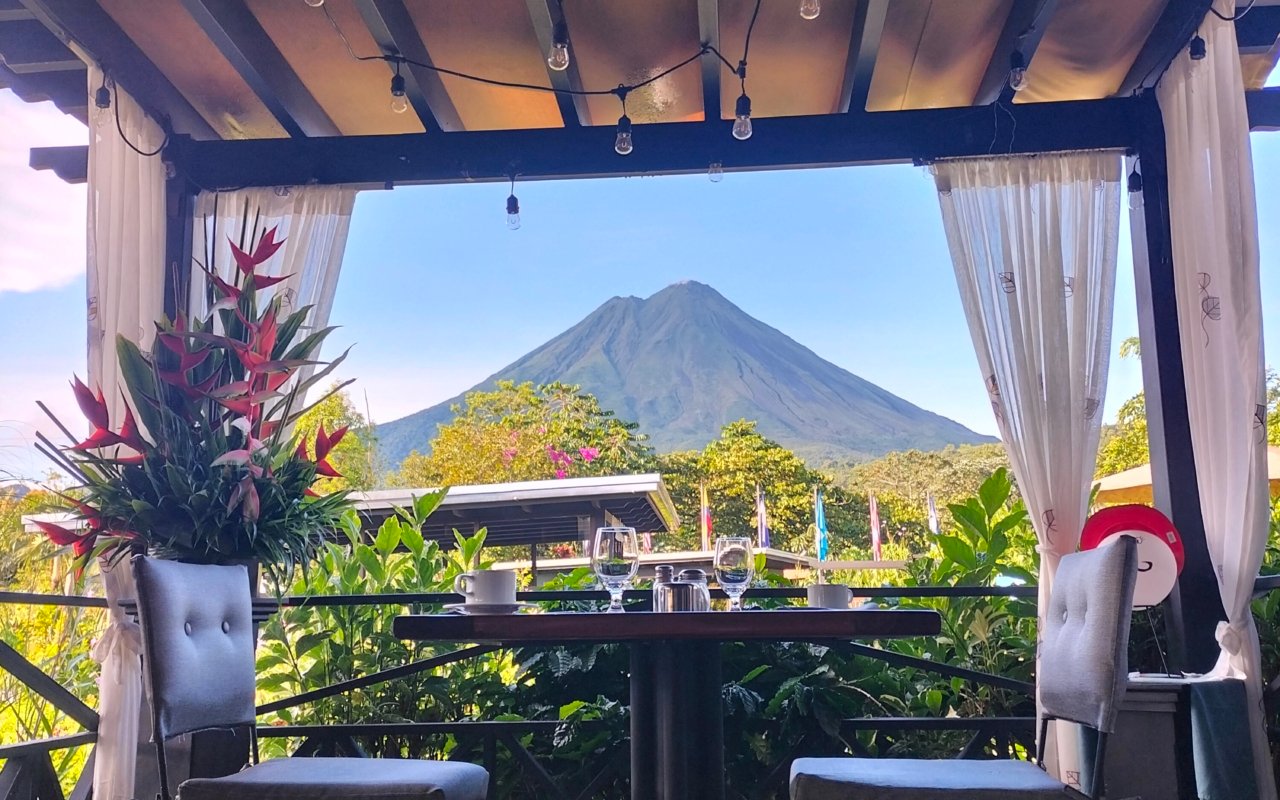
Volcano route of Nicaragua and Costa Rica Self guided tour

Travel to Nicaragua: Colonial cities and active volcanoes
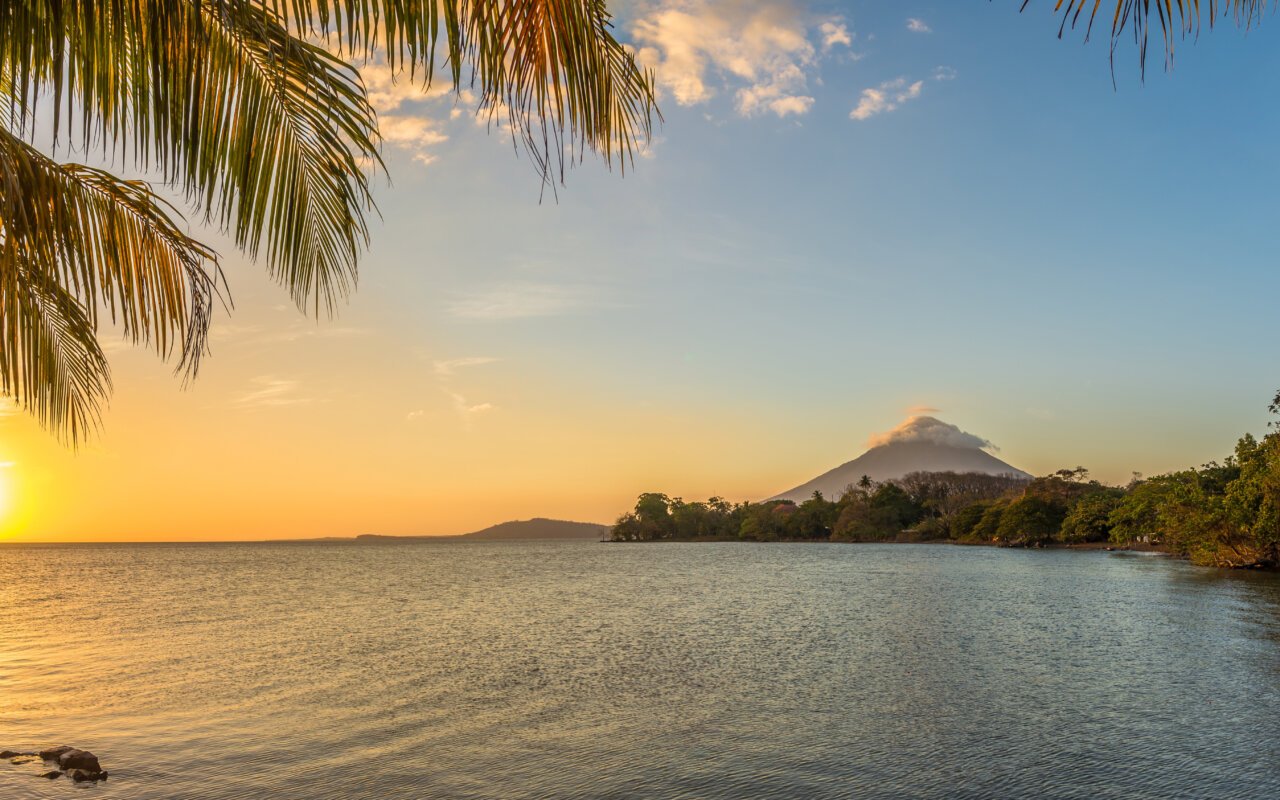
Nicaragua must-sees Volcanoes, lakes & Pacific ocean
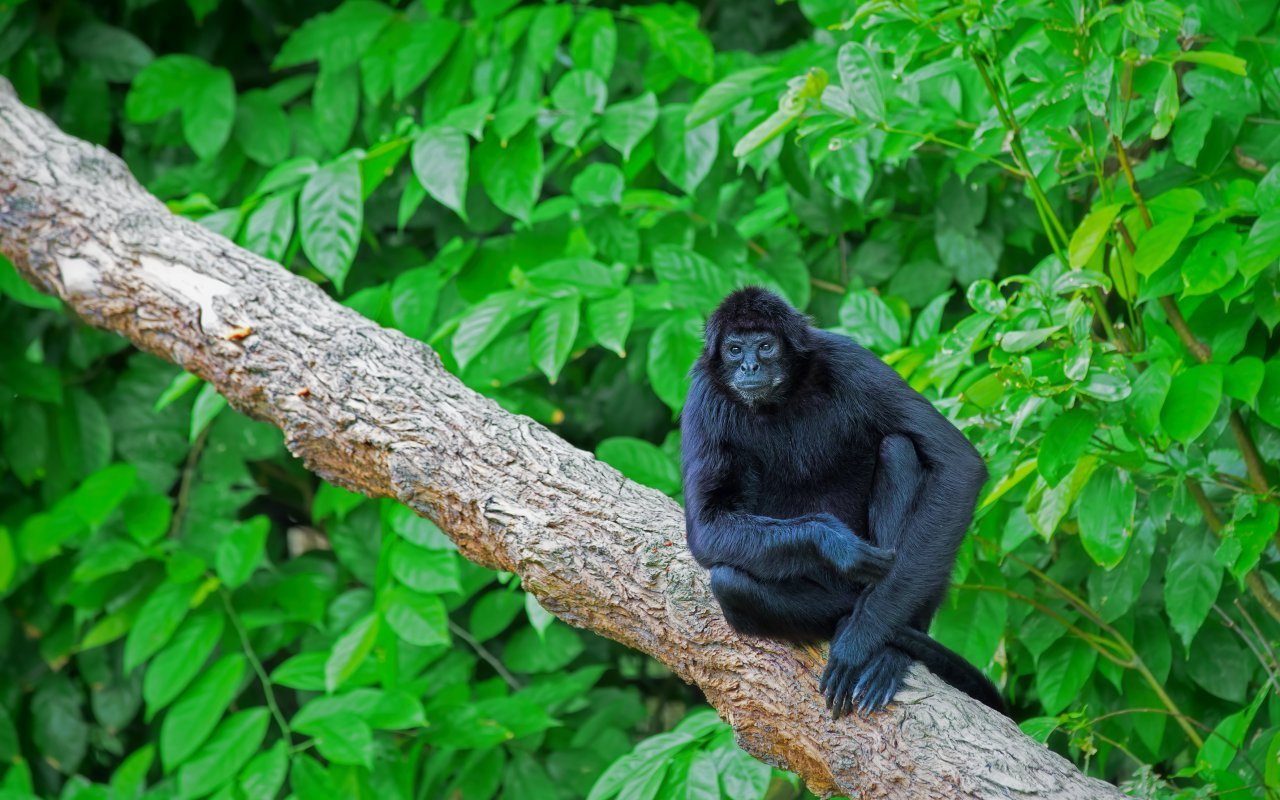
Nature & Volcanoes of Nicaragua and Costa Rica
El Hoyo volcano
El Hoyo is the most important active volcano in a series of volcanic formations including Las Pilas volcano, Asososca lagoon and Malpaisillo lagoon , with a summit altitude of 1,050 metres. It is distinguished by a hole on one of its slopes, rather than on the summit. Fumaroles still escape from its crater.
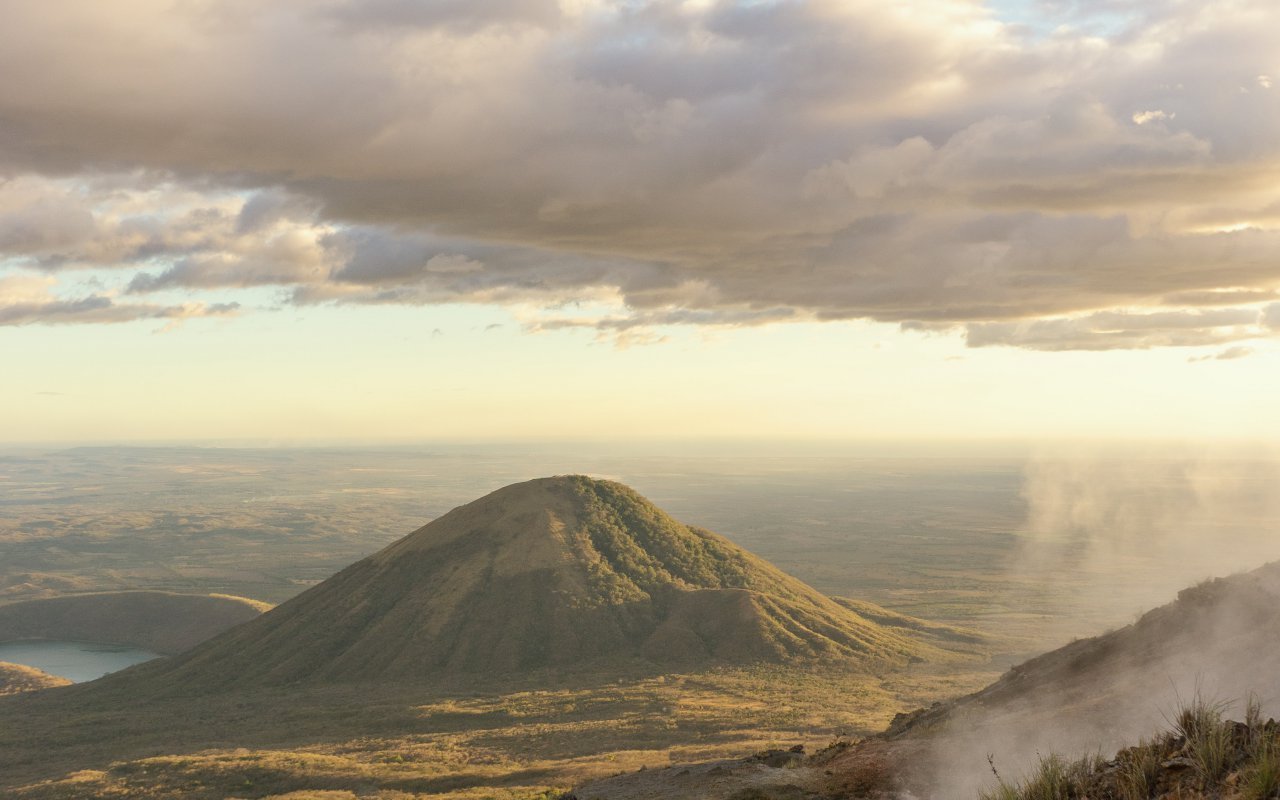
Le Telica
The Telica volcano is located 30 kilometers northeast of the city of León. One of Nicaragua’s most active volcanoes, it has erupted regularly since the arrival of the Spaniards, emitting gas and volcanic ash.
The volcano rises to an altitude of 1,061 metres. Its last eruption in 1948 left a crater 120 metres deep and 700 metres in diameter. Nearby, in the small village of San Jacinto, volcanic manifestations such as hot springs and the smell of sulphur can be observed: these are the Hervideros de San Jacinto . Many legends and myths surround this timeless place, which is often the starting point for excursions on foot or horseback to the Telica crater, with the possibility of camping on its summit for the night.
The climb up to the volcano is a strenuous 3 to 4-hour hike, depending on your pace, over narrow paths of volcanic sand and stone. You’ll be lucky enough to catch a glimpse of the volcano’s fumaroles and projections. The last hour of the ascent before reaching the crater is easier and offers a variety of pretty views of the surrounding area. At the top, the view into the crater and the bubbling lava is spectacular. To enjoy this spectacle all night long, it is possible to camp on the crater flanks accompanied by a guide. At dawn, the sunrise over the valley and the Maribios chain of volcanoes is breathtaking when the sky is clear.The descent takes just a few hours, accompanied by incredible views of the surrounding volcanoes!

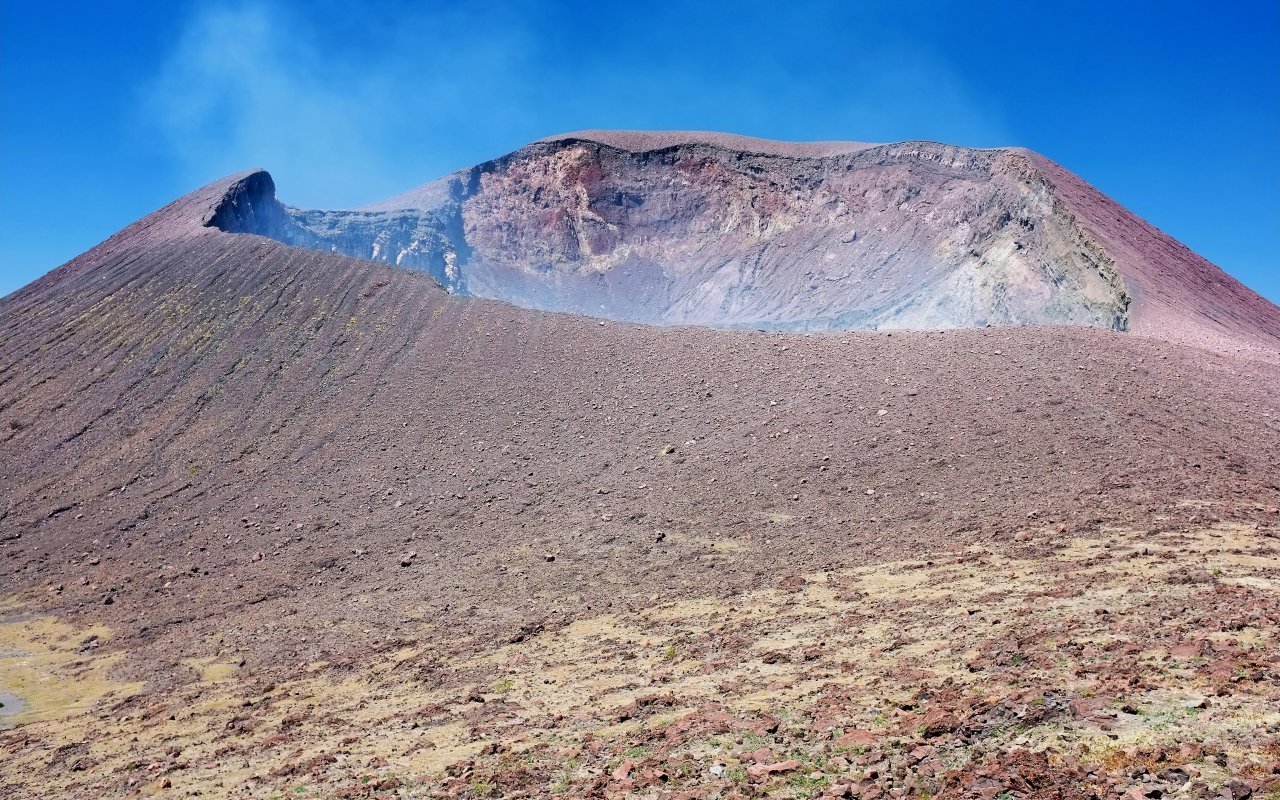
Momotombo
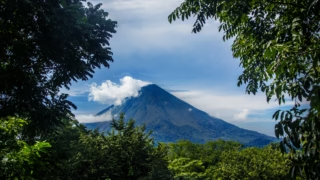
As you drive between Managua and León, you’ll inevitably come across the Momotombo volcano on the north shore of Lake Xolotlánin Managua .
Its almost perfect conical shape rises to an altitude of 1,258 m. Itwas at the foot of the Momotombo volcano that the Spaniard Francisco Hernández de Córdoba decided to build the first colonial city of León, León Viejo, in 1524 . However, the violent eruption of 1610 completely destroyed the town, prompting the inhabitants to move it to its present site some 30 km to the west.
The ascent of the Momotombo volcano is difficult due to its steep slopes, the sand and volcanic rocks that cover it and the fact that access to the privatized site requires prior authorization from the energy company that manages the geothermal power plant installed at the foot of the volcano.
Nevertheless, the eight- to ten-hour trek is amply rewarded by a breathtaking panorama of the crater, neighbouring volcanoes, the town of León, the Pacific Ocean and, if the view is clear, the Masaya volcano and theisland of Ometepe.