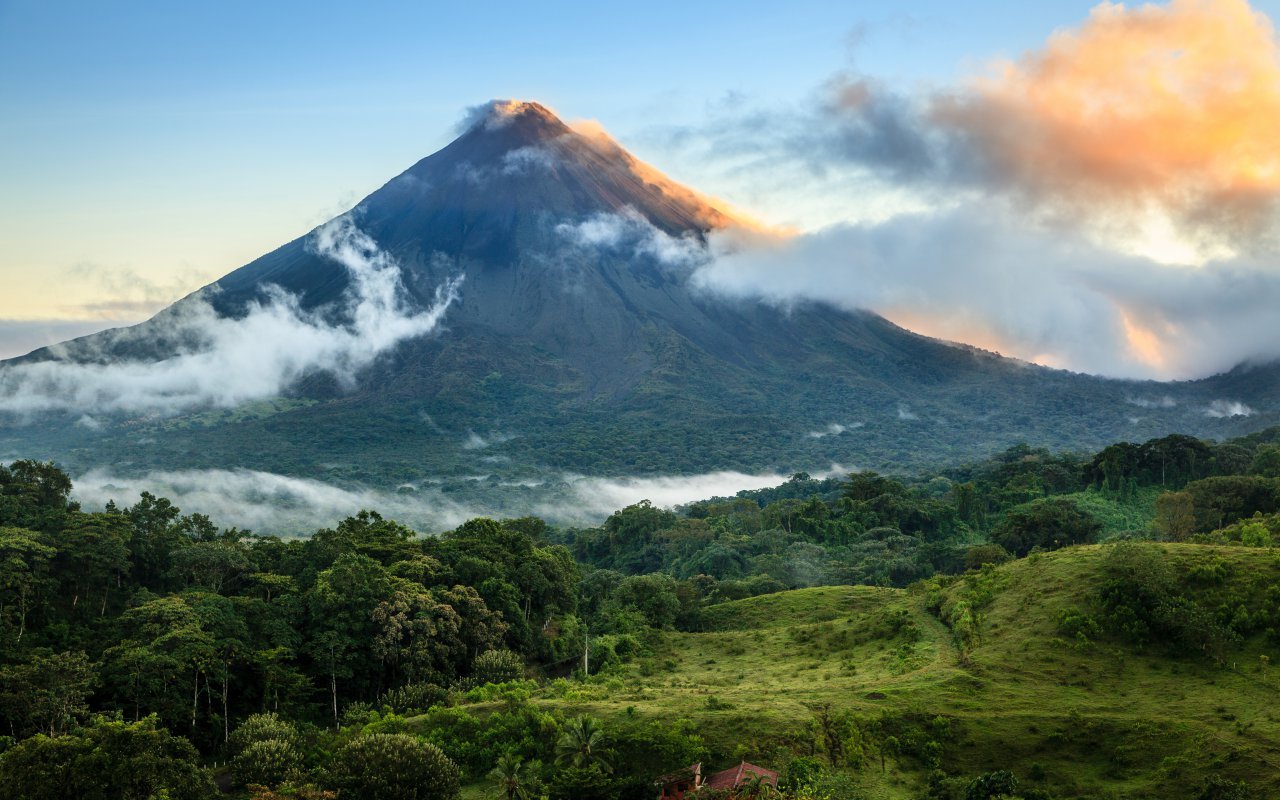
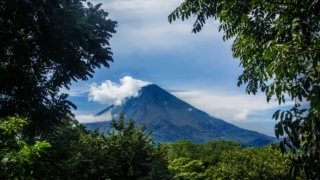
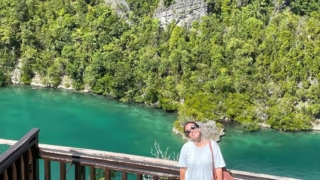
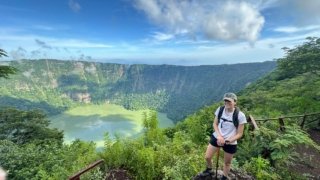
Considered a small town, the Masaya region is nonetheless one of the most densely populated in Nicaragua. Its proximity to the capital Managua and the city of Granada are undoubtedly the reason for this. The Masaya region is rich and attractive, not only for its culture, products and markets (see below), but also for its two incredible natural sites: the Laguna de Apoyo and the Masaya volcano.
Where is Masaya located?

Located between the cities of Managua and Granada, the department of Masaya is made up of 9 municipalities: Tisma, Masaya, Nindirí, La Concepción, Masatepe, Nandasmo, Niquinohomo, Catarina and San Juan de Oriente.
Masaya geography and weather
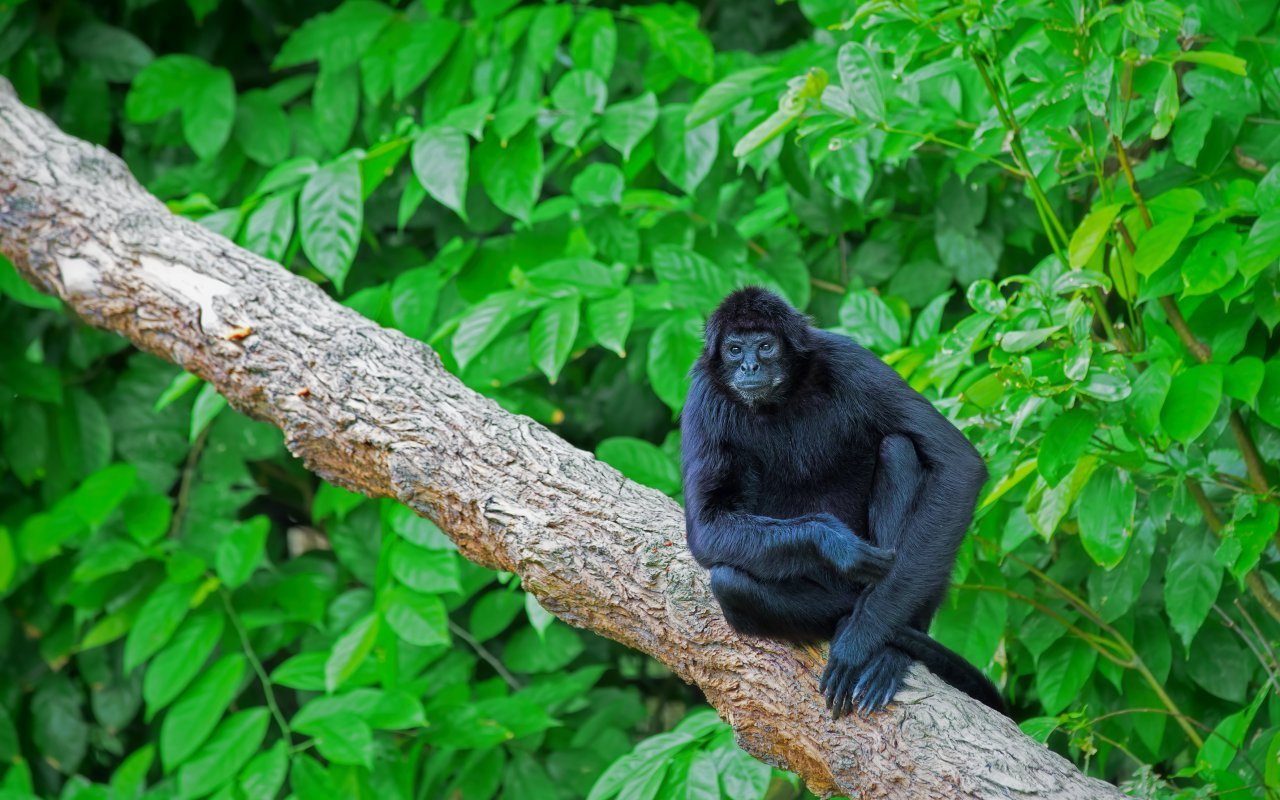
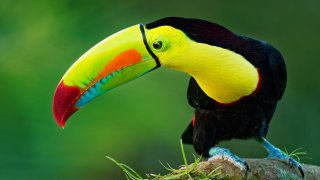
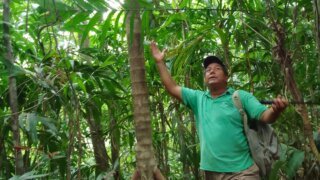
The climate in this region is semi-humid, known as tropical savannah. The temperature remains around 27ºC all year round. This mild climate favors the natural habitat of certain species. The region is home to a wide range of animals, from squirrels and deer to howler monkeys and rare birds. Strictly speaking, however, there are no forests in the region, but rather splendid, well-hidden patches of green, small bosques, bits of tropical dry forest that cover the area around Masaya.
Discover Masaya and the volcanoes of Nicaragua with our itinerary
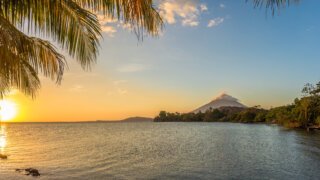
History, Culture and Traditions in Masaya
Granada, León and Managua… All temporary or eternal capitals of Nicaragua. And let’s not forget Masaya. In 1845, Masaya became the country’s capital for a period of 10 years, and is renowned for being the base of large indigenous community districts.
The Masaya lagoon was once home to one of the region’s largest chiefdoms, the dirianes. The region’s inhabitants have always fought and refused to submit, first to the Spaniards, then to conquistador William Walker in 1856, or to the Somoza regime in the 1970s. To this day, the region’s culture remains strong, with its inhabitants constantly fighting to preserve their indigenous traditions and customs.


Capital of Nicaragua’s folklore
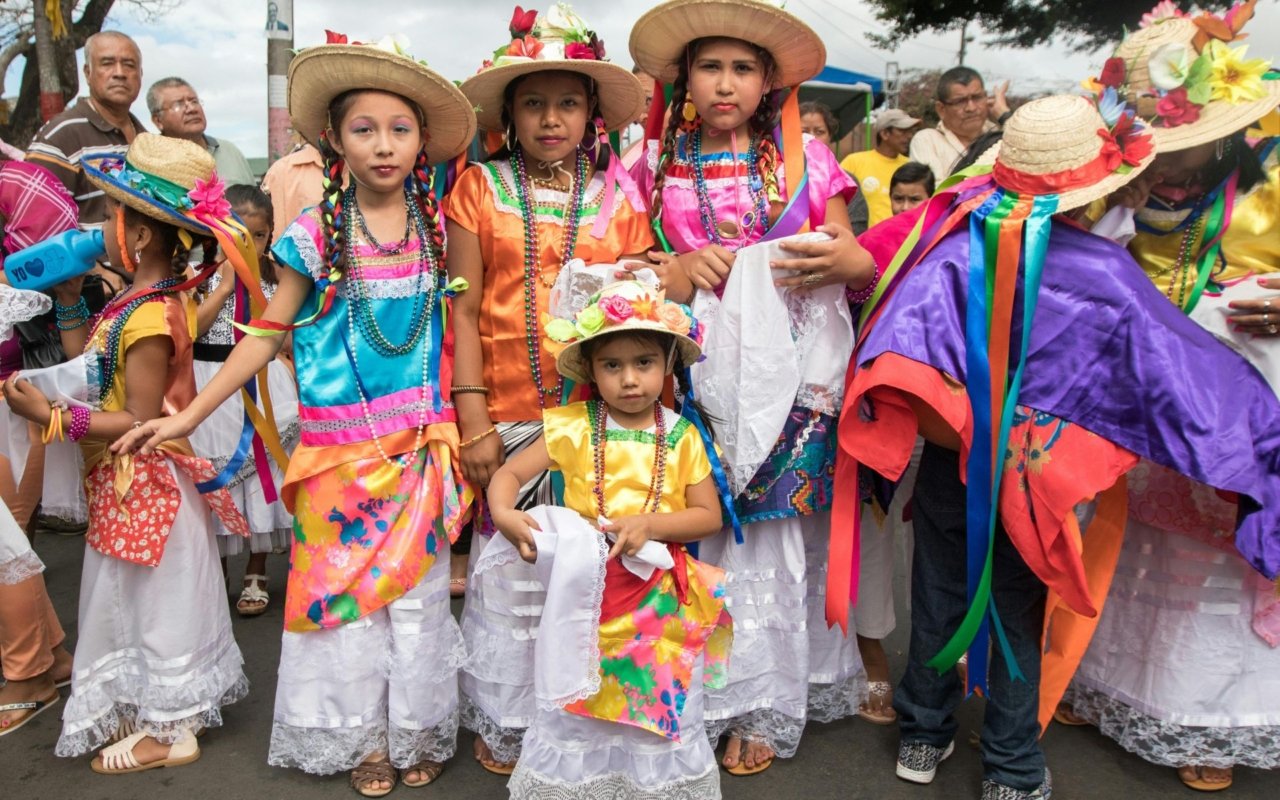
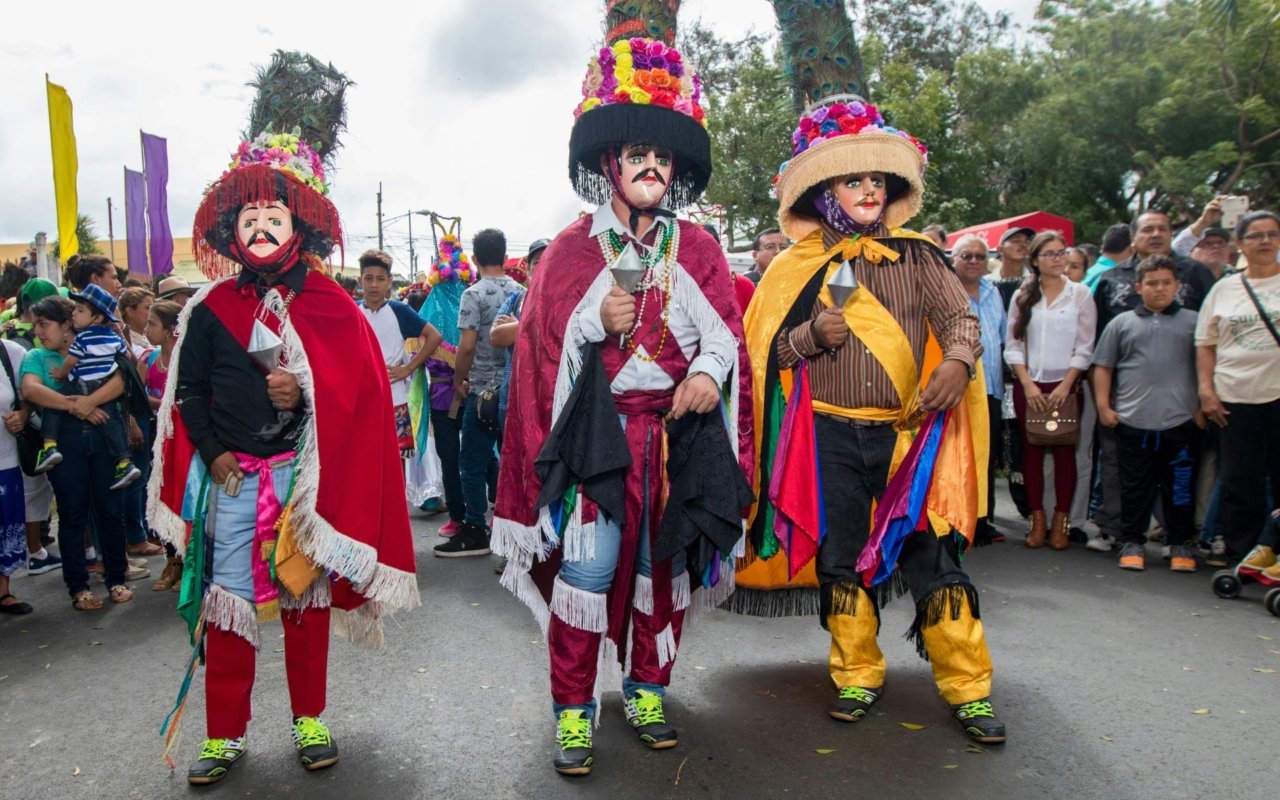
As you can imagine, culture and tradition play an important role in Masaya. In fact, the region is known as the capital of Nicaragua’s folklore and cultural heritage. With its music, traditions, dances, poetry, sculptures and local legends, Masaya is a very Nicaraguan town, not very touristy yet very interesting to visit.


Typical processions
If you’re lucky, you’ll be able to witness some typical processions. As in León and Granada, Holy Week (late March/early April) is an important time for the Catholic population. Processions take place in every street of the city. In September, Masaya’s patron saint, San Jeronimo, is celebrated with folk dances.
Traditional funerals
As in some Central American countries, the dead in Masaya are buried with a very special ceremonial. Don’t be surprised to see splendid carriages pulled by dressed horses, giving the procession and the tribute to the deceased an air of celebrity and mysticism. Far from being folklore, it’s simply a sign that traditional practices endure here.

What to do in and around Masaya?
Masaya’s town center isn’t very large, so you can stroll the streets, enjoy the calm and serene atmosphere, enter the churches and visit the craft market located inside an old fort just a few steps from the central park.The surrounding area offers more possibilities, so you can visit the following sites:
- Masaya Volcano National Park (see below)
- Laguna de Apoyo
- the village of Catarina and its viewpoint
- the village of San Juan del Oriente
Masaya crafts & artisan market
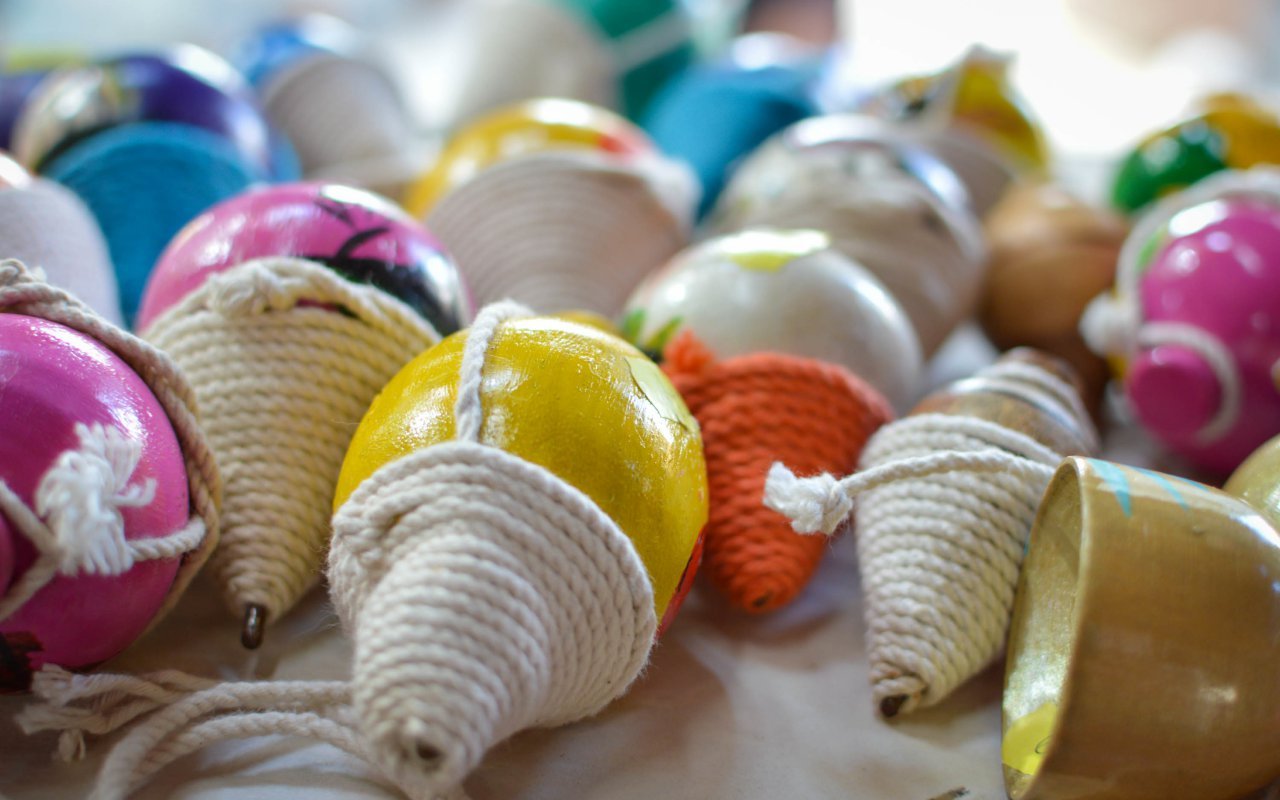
Masaya’s renowned craft market is “the place to be” for lovers of local handicrafts or simple travellers looking for a souvenir. Its walled enclosure is a real eye-catcher, inviting you to step through its wide-open gates. The Masaya craft market, el mercado de artesanias, is the perfect place to pick up a few gifts or folkloric charms. But you still have to find it! There are 2 renowned markets in Masaya. The first, the artisanal one, is the best known, and the central market. From the central park, it’s easy to ask for the road, 1 cuadra al este, and you’ll recognize its wall and fortified perimeter.



Masaya Volcano National Park
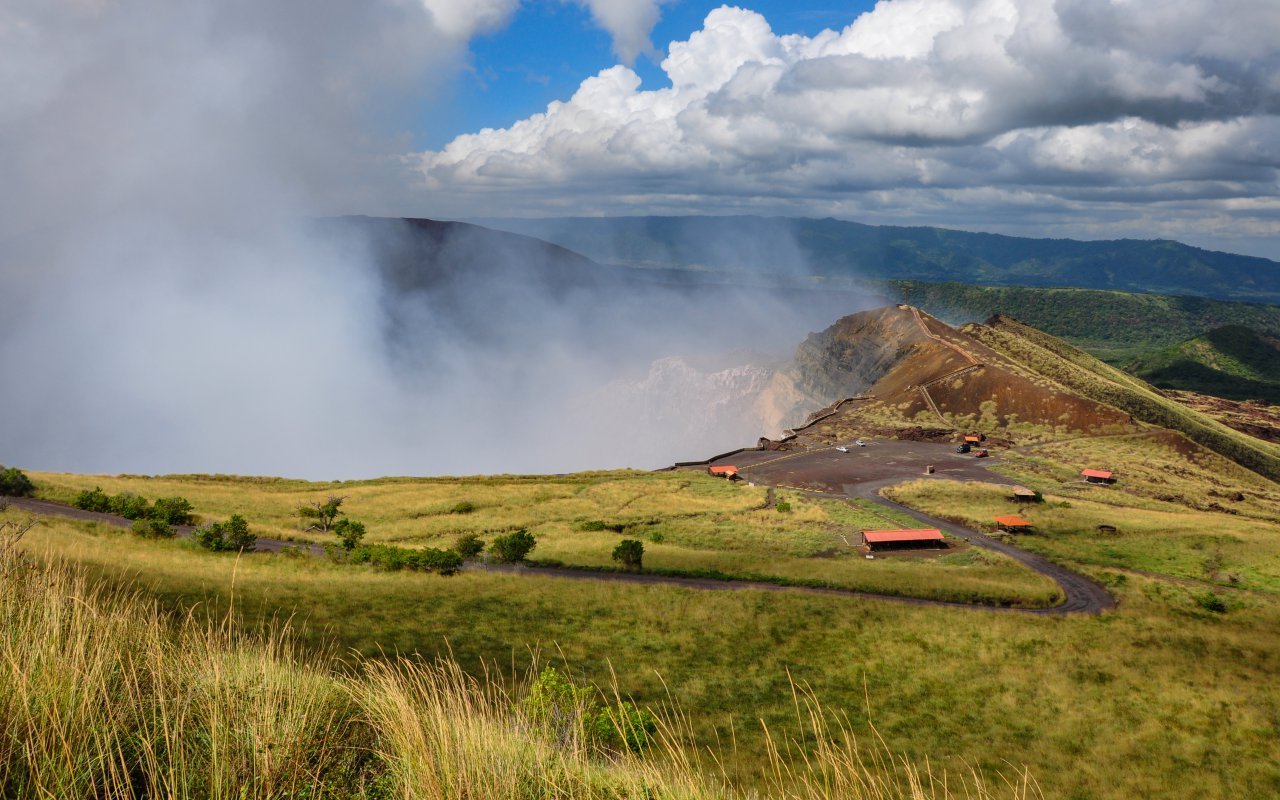
Located on the road between the capital Managua and the town of Masaya, Masaya Volcano National Park is Nicaragua’s most popular and recognized site.
Covering an area of 54 km², the park includes two volcanoes and five craters. In the past, successive eruptions of the volcanoes drove away local populations and Spanish colonizers, who nicknamed the Masaya volcano La Boca del Infierno.


The park’s main crater, the 638-metre-high Santiago Crater, can be reached by car via an asphalt road to observe its glowing lava lake. One of the few places in the world where you can see this phenomenon, and certainly the only one so easily accessible.
What an incredible opportunity to get so close to a crater and its surroundings, just a few meters away! Every day of the week, Masaya Volcano National Park opens its doors. During the day, you can discover the specific flora and fauna that have developed here, adapting to the soil strewn with volcanic rocks.
You’ll see coyotes, skunks, raccoons, opossums, iguanas, deer and monkeys, among others. The hiking trails also offer beautiful walks to the park’s various craters, as well as to the Tzinaconostoc cave, home to hundreds of bat nests. Near the picnic area, a museum provides visitors with brief information on the history of human occupation of the region, its geology, and the structure and nature of the park and neighbouring volcanoes.


Santiago Crater lava lake at night
At night, the park’s main attraction is the Santiago Crater lava lake, also visible during the day but less impressive. As you approach the edge, you can observe, listen to and feel the movements of the incandescent lava rising from the depths. The visit is limited to 15-20 minutes, mainly due to the gases emitted by the volcano.

Discover Nicaragua and its volcanoes!
Nicaragua must-sees Volcanoes, lakes & Pacific ocean

Travel to Nicaragua: Colonial cities and active volcanoes
Volcano route of Nicaragua and Costa Rica Self guided tour
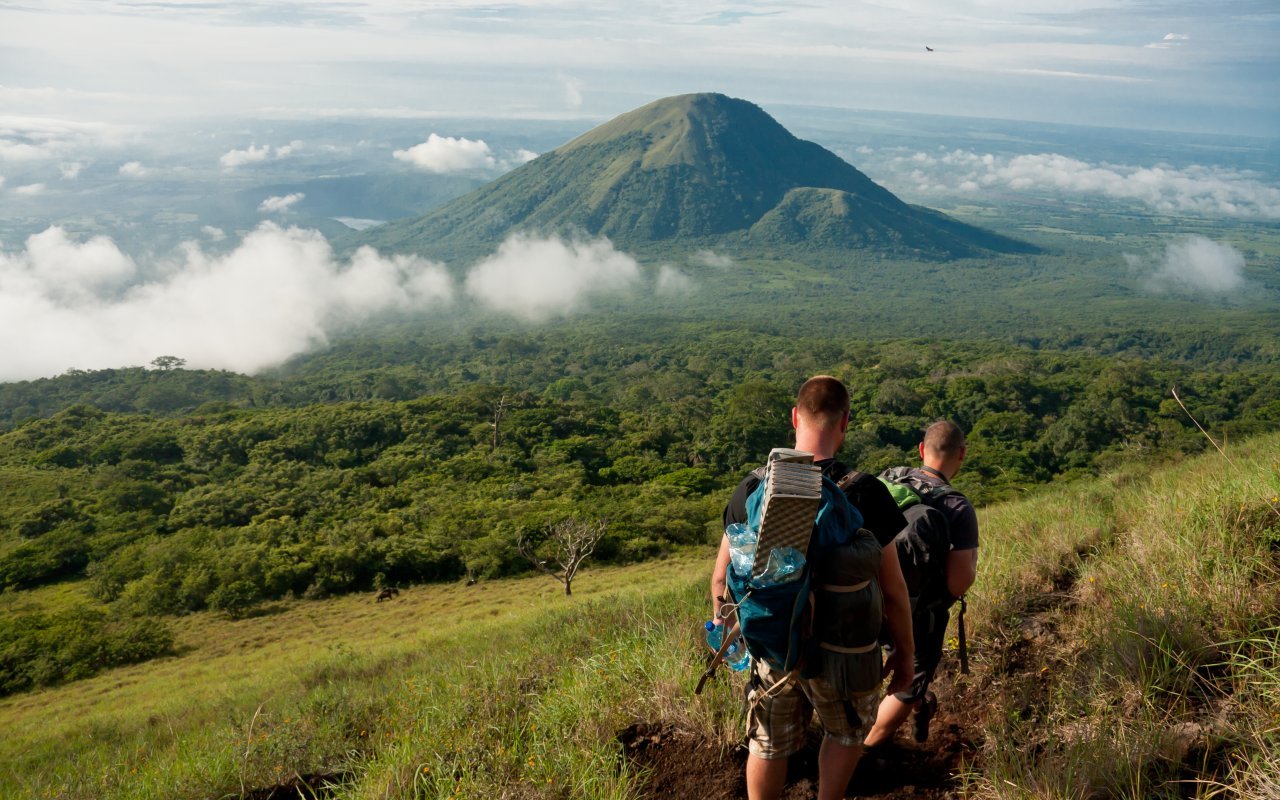
Trek and volcanoes tour in Nicaragua