Granada : la Gran Sultana
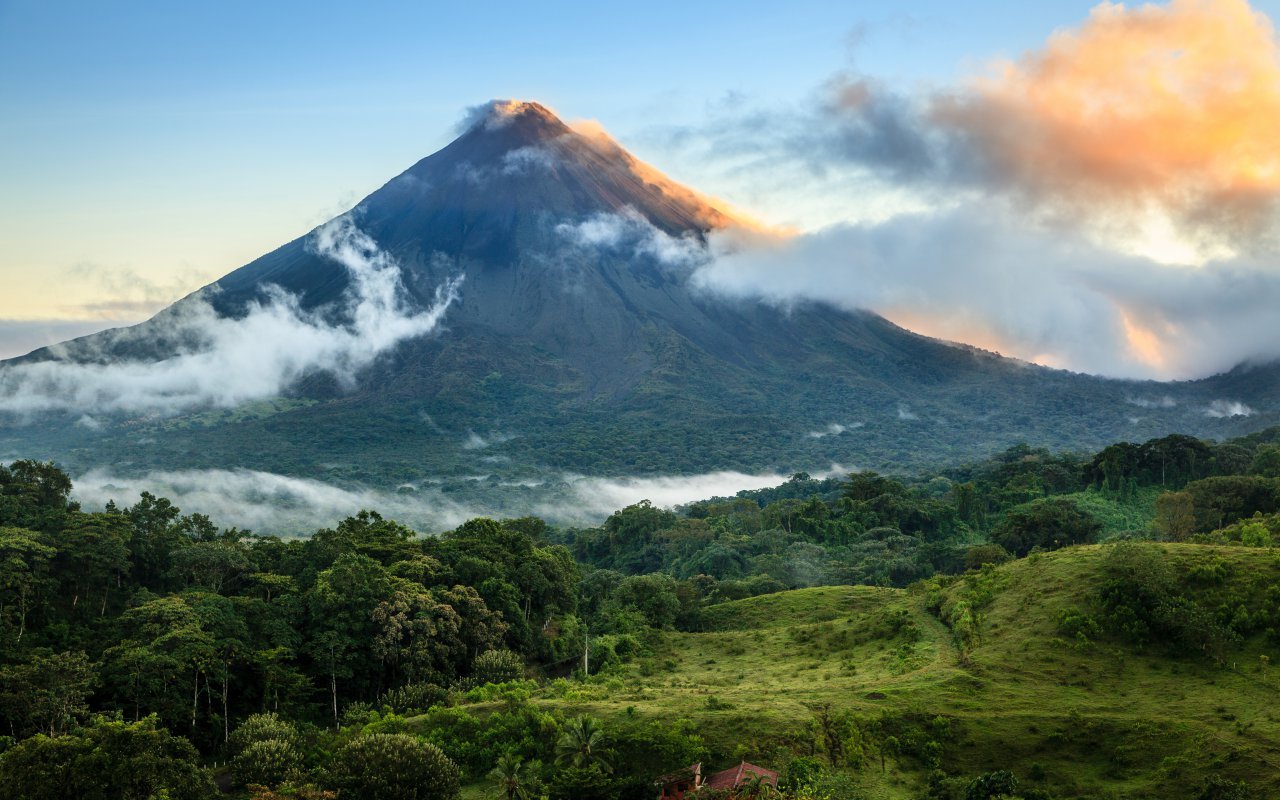
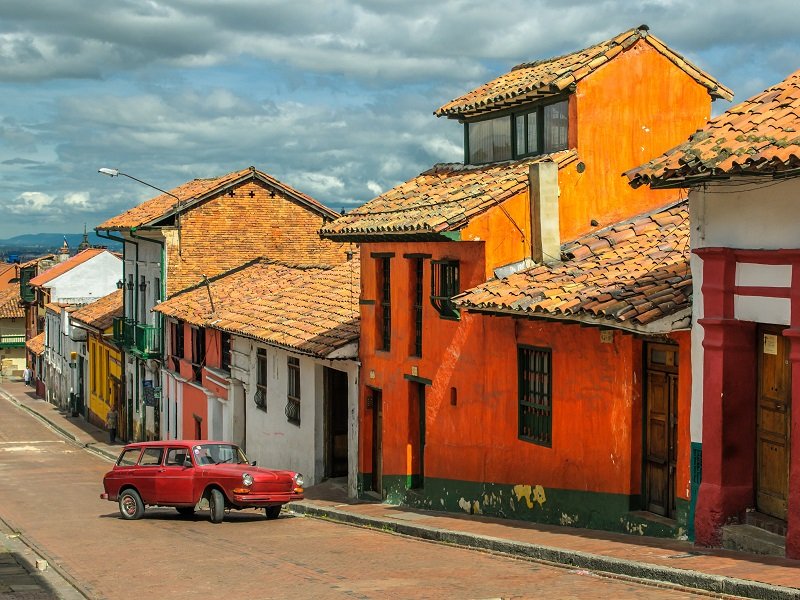
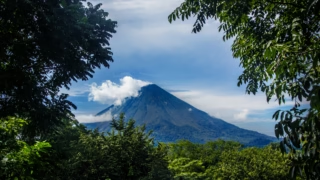
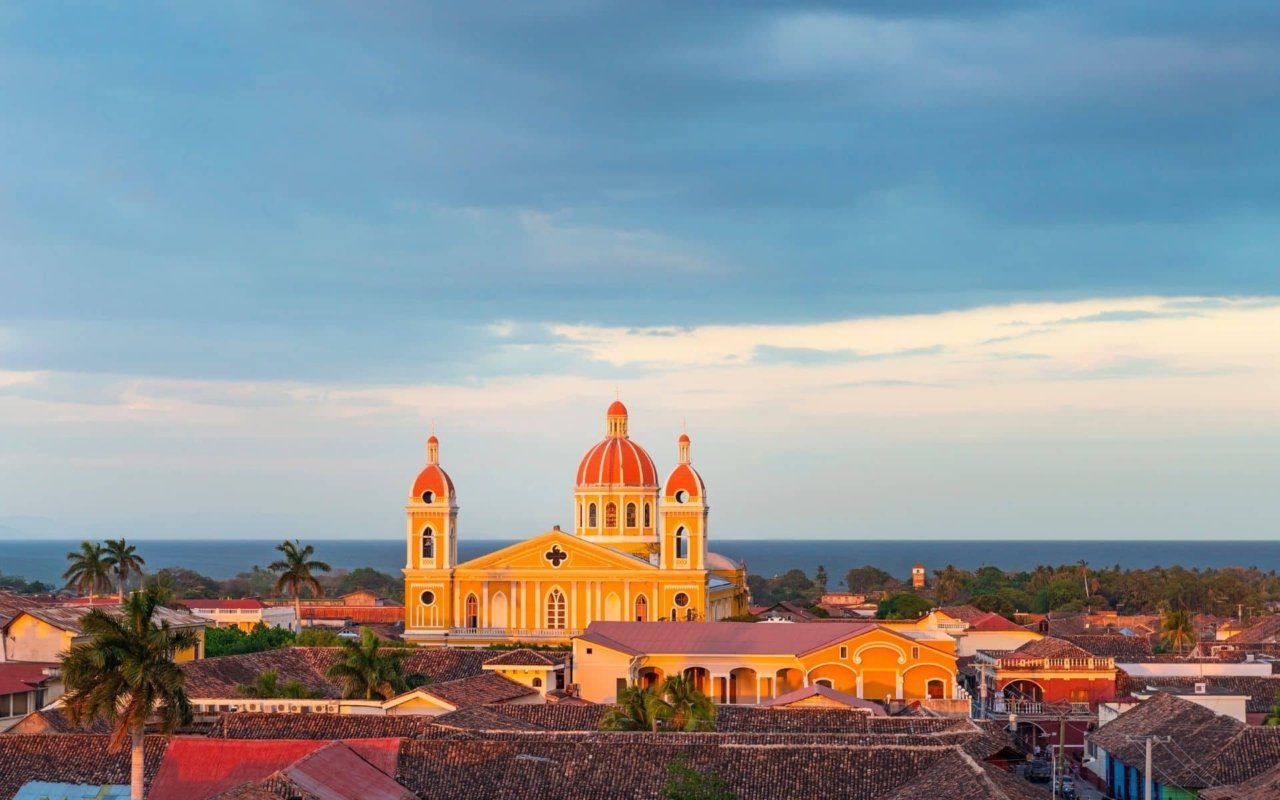
The city of Granada is one of Nicaragua’s most important tourist attractions. Its striking colonial appearance is the very proof of its history, and it is the oldest city in the region.Many travellers start their trip here, avoiding a trip to neighbouring Managua. Thecolonial architecture of its old center, its museums, galleries, parks, hotels and restaurants, and its bars ensure a cosmopolitan atmosphere and a special, unique charm to the city. Look up and you’ll come face to face with Mombacho, the volcano that watches over the city of Granada from above.

A city between lakes and volcanoes
Granada is located in the southwest of Nicaragua, 45 kilometers from the capital Managua. It is bordered by Nicaragua’s great freshwater lake, Cocibolca. Granada is, of course, the main town of the region, which is divided into 4 municipalities: Granada, Diria, Diriomo and Nandaime.

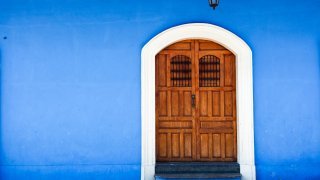
Strolling around Granada, the great sultana, is a pleasure and guarantees many local encounters. 110,000 inhabitants live in this dynamic, warm and colorful city. Its bright, well-kept houses, markets, squares and churches will delight the most curious, and you can count on a visit to a few museums to add a touch of local culture to your stay.
Temperatures and weather in Granada
As far as the climate is concerned, some would say we’re in the tropics. It can be hot in Granada. And a little humid, not helped by the proximity of the lake. A little higher up, it’s cooler. Count on rather warm temperatures (but much less than those of its rival León) during your strolls around town. The swimming pool or a dip in the lake are almost an excuse to brighten up the end of the day or dress up the end of the excursion. It averages between 25 and 28 degrees in Granada, we’re over 250 metres above sea level and it doesn’t rain here any more than anywhere else in the country, so a rainy season is like a monsoon. The latter is, of course, less and less regular, due to climate change of course.
A little history...
A colonial city
Granada, known as La Grande Sultane, was founded in 1524 by the Spaniard Francisco Hernandez de Cordóbas. The town was built to become a center and central city of the region. Along with Léon, it is one of the oldest colonial cities in Nicaragua, and one of the oldest on the American continent.
Granada was named after the Spanish city then belonging to the great Catholic kingdom of Iberia. Not simply a Spanish conquest or colony, Granada was well and truly inscribed in the official Spanish registers, those of the Crown of Aragon and Castile, in Spain!
Easy access for trade
Historically, Granada is the “sister” of Antigua in Guatemala. At the time, the town was remarkably dynamic, with trade flourishing thanks to Granada’s access to the ocean via the lake. Prosperity and integration with the indigenous community were the adjectives used to describe this Spanish colony , not to mention the many twists and turns of history that followed. Granada’s prosperity attracted settlers and conquistadores, as well as pirates and privateers sent by rival European crowns.
With access to the San Juan River on the Caribbean side, it was easy for them to sail quietly up the rio and disembark to confront the first forts protecting access to the great sultana, Granada. And how could we not mention the story of that gringo buccaneer, Walker, who pursued a crazy dream of unifying Central America and making it his own fiefdom. Incredible! William Walker was regularly stationed in Granada. At the time, after the independence of 1821, in 1856 to be precise, the town was an open cemetery. The great diseases imported by travelers had taken their toll on the mixed-race community and the remnants of the Spanish colony.
Rivalry for capital city of Nicaragua
The enlightened buccaneer ordered the city’s abandonment and destruction! Mercenaries and other outlaws were sent in. Half of Granada went up in flames, the inhabitants fleeing to Ometepe, among other places. The incendiaries had carved the words “here was Granada” on the last smoking stones of the city. And yet, Granada is and will remain the Great Sultana, battling with neighboring León for the post of Capital of the country. The conservatives preferred Granada, while the liberals were further north, in León. It was finally decided in 1858 that Managua would be the capital! This did not prevent Granada from being the scene of confrontation during the conflicts Nicaragua experienced in the second half of the 20th century, even if it was relatively spared during the Sandinista revolution of the 70s and 80s.
What to do in and around Granada
The city of Granada is a colonial jewel that you can discover on foot. Here are a few places to stop:

Antiguo Convento San Francisco
founded in 1529 under the name of the Immaculate Conception by Brother Toribio de Benavente of the Franciscan order. Today, it has been converted into a museum. You’ll see images of Granada from 1940-1980, along with a model of the city’s historic center, primitive paintings and archaeological finds.
Xalteva Church
the city of Granada was built around this church, and you can still see the original wall that separated the Spanish quarter from the indigenous quarter.
The neoclassical Cathedral
located in Granada’s central park. Erected in 1583, it has been destroyed and rebuilt several times.
Parque Colón
Granada’s central park, is the ideal place to relax on a bench in the shade of the palm trees, drink a batido ( fresh fruit juice) and take time to observe passers-by and shopkeepers.
Fort de la Pólvora
a fortress built in 1748 as a gunpowder storehouse and prison to defend against pirates.
Mi Museo
housed in a beautiful colonial house, this museum presents a private collection of pre-Columbian ceramics, certainly the finest in the country.


Just a few kilometers from Granada, you can take a day trip to discover a number of exceptional sites, some of which are listed below:
- isletas de Granada (see below)
- mombacho volcano (see below)
- the white villages or Los Pueblos Blancos
- the Laguna de Apoyo
- the town of Masaya with its craft market
- masaya Volcano National Park

A hike on the Mombacho volcano
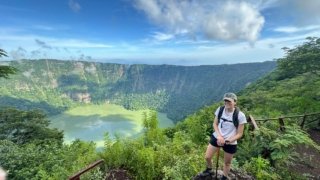
The Mombacho volcano is one of Nicaragua’s best-known volcanoes, not only for its proximity to Granada (10 km), but above all for the infrastructure and surprises it offers. From up there, the view of the lake, the city of Granada and its Isletas is incredible!Mombacho rises to an altitude of 1,345 metres and has 4 craters, all covered by the bosque humedo. This particular wetland is a rare sight so close to the Pacific. It is also possible to see this phenomenon on the Maderas volcano at Ometepe. The flora and fauna on the Mombacho volcano are rich. Nearly 150 species of orchid, 50 types of mammal and 120 species of butterfly have been recorded.A coffee finca has planted its seedlings on the volcano’s flank, and a nearby community even produces chocolate! The Mombacho volcano is a must-see if you’re passing through Granada. There are a number of trails of varying difficulty to discover the Mombacho nature reserve
- El Cráter: medium-difficulty, self-guided hike lasting 1h30
- El Tigrillo: difficult hike, 2h30 in length
- El Puma: a difficult 4-hour hike, with a local guide compulsory


Isletas de Granada
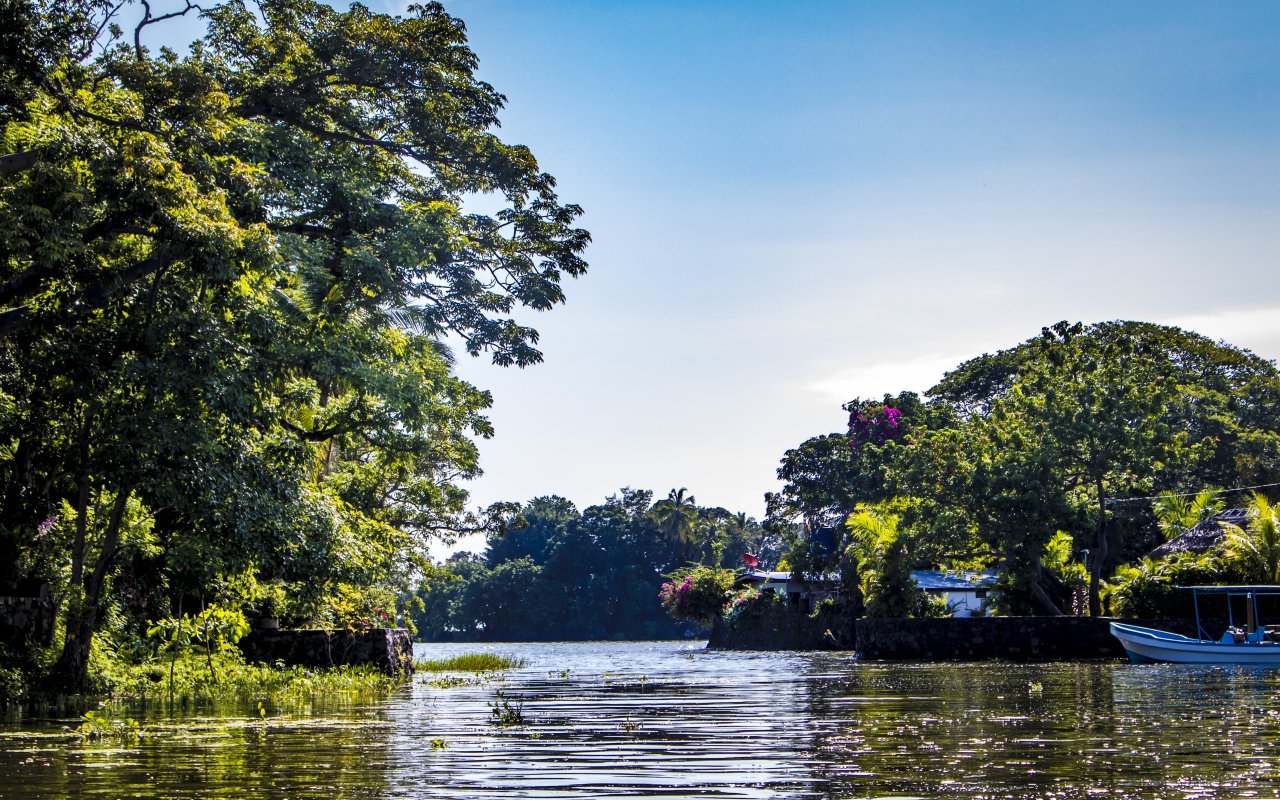
When the Mombacho volcano erupted a long, long time ago, huge boulders were spat back into the lake, according to the ancients. The famous 365 islets of Lake Nicaragua are the result of this explosion.These isletas vary in size and shape, from a hundred square meters to a hectare. Thousands of people live here, alongside the incredible variety of animals and species found on these islets. Discover them as you float along in the calm…


Plan your next trip to Nicaragua and be sure to visit Granada!