Vegetation and plants in Nicaragua
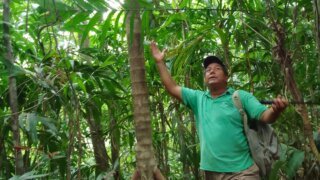
Nicaragua is the largest country in Central America, with a richly colorful territory. The country is known for its volcanoes, lakes and rivers, mountainous terrain and vast plains. In Nicaragua you’ll discover over 70 unique eco-systems, and 7% of the world’s biodiversity, so you’ll soon realize why this territory is called the second lung of Latin America. The diversity of Nicaragua’s landscapes is due to the country’s varied climatic conditions. There are seven different types of forest, from sub-tropical to dry forest, from humid forest to wooded savannah. Each of these forests has its own climate and vegetation. Nevertheless, in Nicaragua, nature is under threat from all sides, whether from lack of protection by the government or from the superior power of private owners, such as those of oil palm plantations. Only 18.2% of the territory is officially protected, and Nicaragua’s rainforest has been left virtually untouched. The eastern region of the country is home to one of the country’s largest forests, with two reserves offering an incredible variety of vegetation and animals
- the Indio Maiz biological reserve , located in the south-east of the country, near the Rio San Juan
- the Bosawas reserve, located in the north-east of the country, from the center to the Caribbean coast. On this coast,
- the Laguna de Perlas is the most spectacular in a paradise-like landscape.
- The island of Juan Venado on the Pacific coast and the Rio Istian on the island of Ometepe are the two richest mangroves in the country, and home to unique species.
Nicaragua’sPacific coast is totally different, with tropical dry forests that are home to a completely different ecosystem requiring much smaller quantities of water. The mahogany tree, for example, enjoys a dry climate for more than 7 months of the year, followed by frequent rainfall


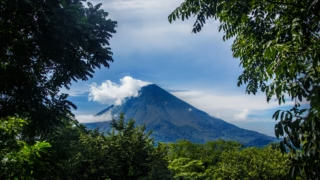
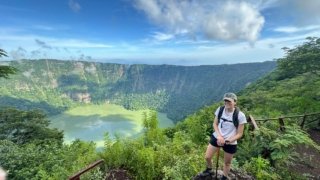
A little higher up, you’ll find cloud forests, so called because the clouds cling to the trees due to their altitude, and transmit a great deal of moisture. The humidity generated by this natural phenomenon creates a natural vegetation very different from the rest of the country. Isolated from other parts of the country, the species that grow and evolve in this context are endemic. Forests of this type can be found on the summits of the Maderas and Mombacho volcanoes, for example. Situated in the middle of Lake Nicaragua, the island of Ometepe is the privileged territory of two volcanoes: Maderas and Concepción. It’s the world’s largest volcanic island on a freshwater lake. In these regions, you’ll have the opportunity to observe hundreds of different species of orchid, as well as cedar, balsam fir and fruit trees
Nicaragua's animal species
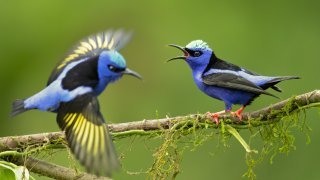
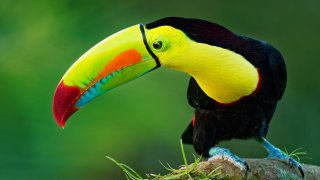
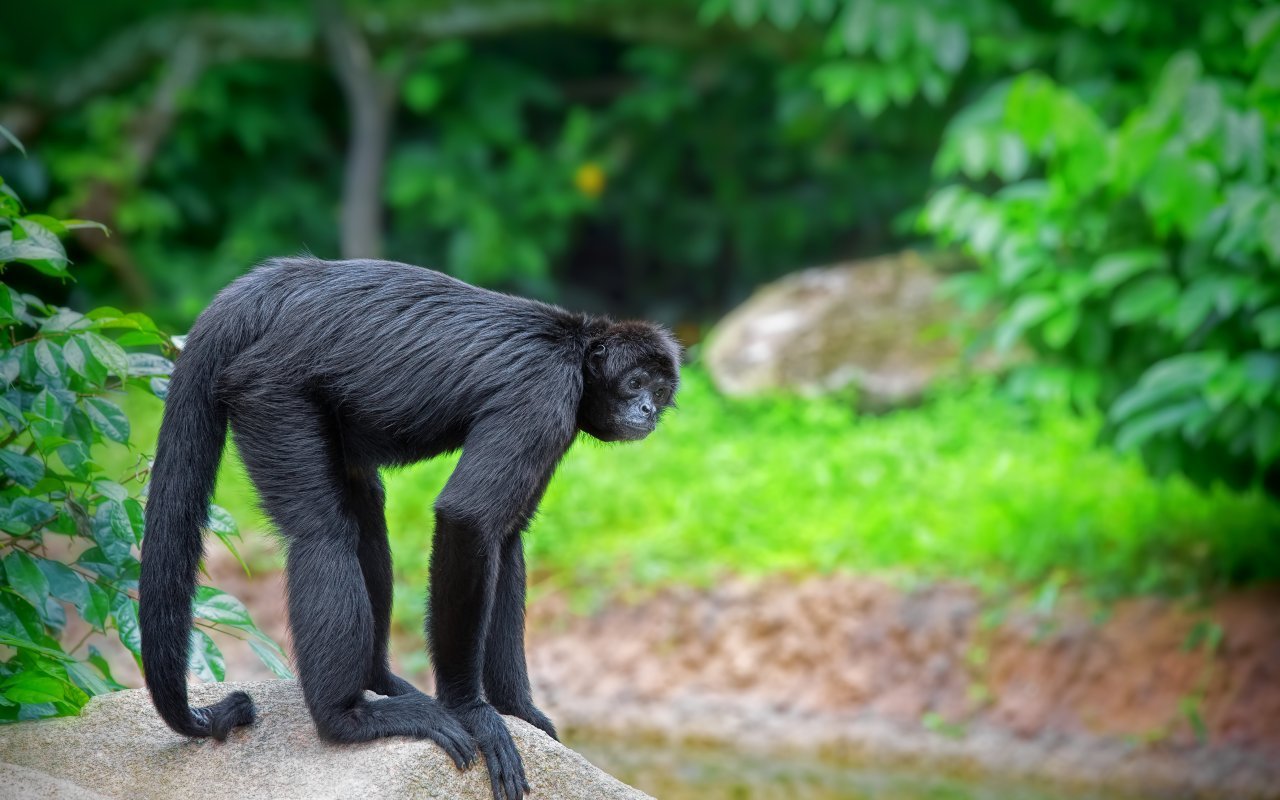
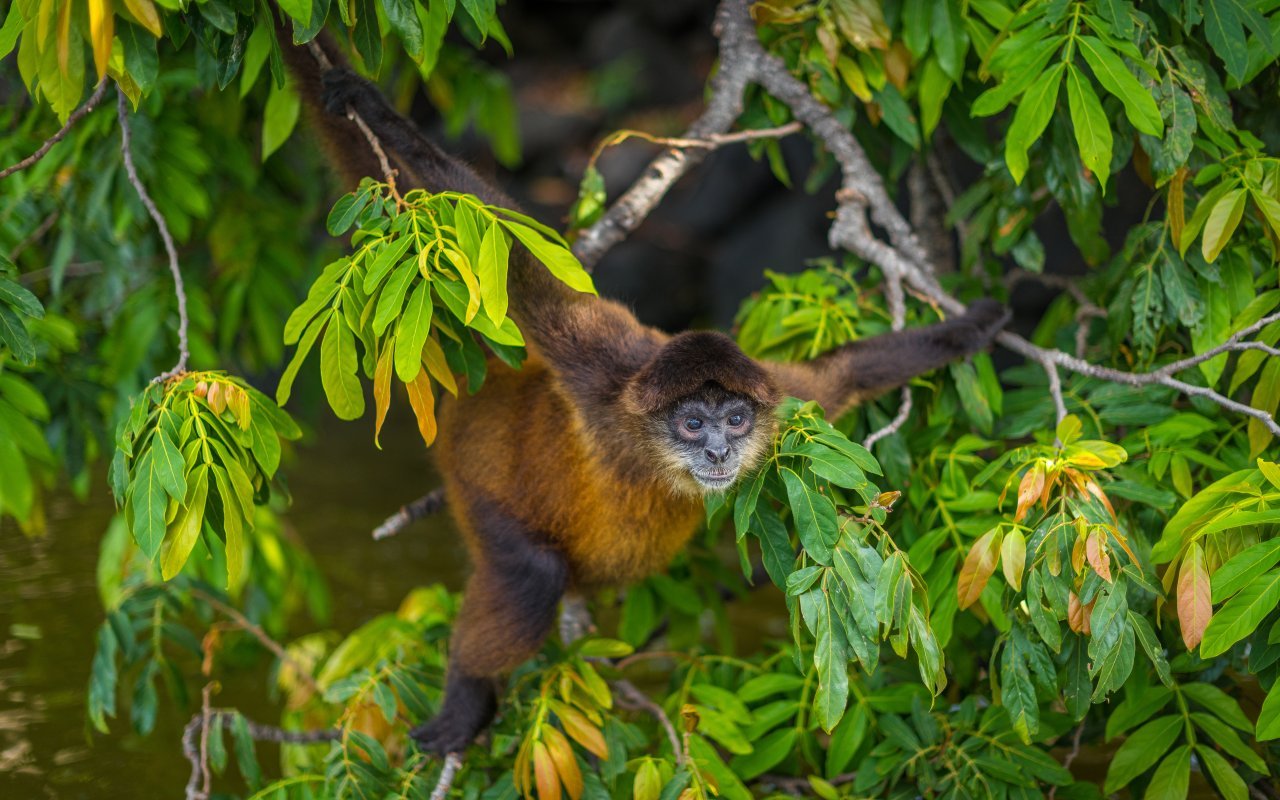
Many travelers come to Nicaragua to observe the diversity of its wildlife. Nicaragua boasts an incredible wealth of biodiversity, with more than 248 species of amphibians and reptiles, 183 species of mammals, 705 species of birds, 640 species of fish and around 5,796 species of plants. In the cool, humid forests of the north, you’ll have the opportunity to observe howler and capuchin monkeys, reptiles and birds. The guardabarranco is Nicaragua’s emblematic bird, with its pretty colors and long tail that distinguish it from other species. Pumas and jaguars have also made their home on these temperate rainforest slopes, as on the slopes of the Mombacho volcano, for example. In the south, close to Costa Rica, different species of caiman are known for their ease of approach.

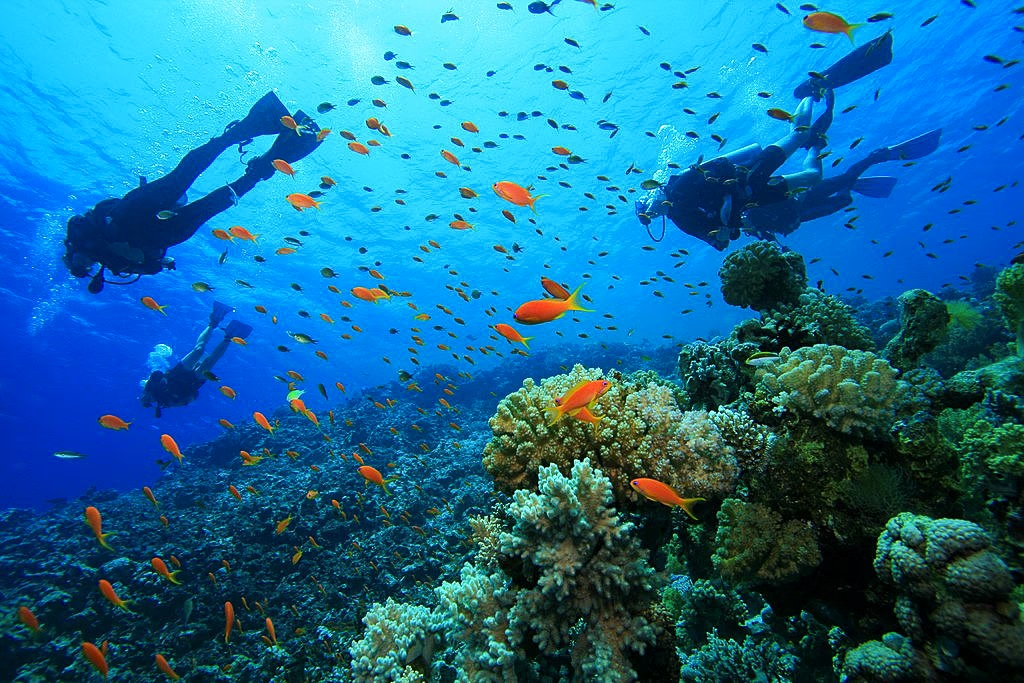
You can observe them at close quarters on night tours. On the Pacific coast, you can watch whales approaching the coast and making spectacular jumps. In a lower category, it’s also on these beaches that, at night and in season, you can observe sea turtles laying their eggs. A natural phenomenon and a protected species, you should approach these mammals with great respect. In central Nicaragua lies Lake Cocibolca (or Lake Nicaragua), the largest freshwater lake in Central America. Many species make their home here, including the world’s only freshwater shark, which entered the lake via the Rio San Juan from the Caribbean Sea. On the Atlantic side, and more specifically in the Caribbean zone, you’ll find numerous manta rays, nurse sharks and an incredible variety of snorkeling fish.
Plan your next trip to Nicaragua with these tour ideas :