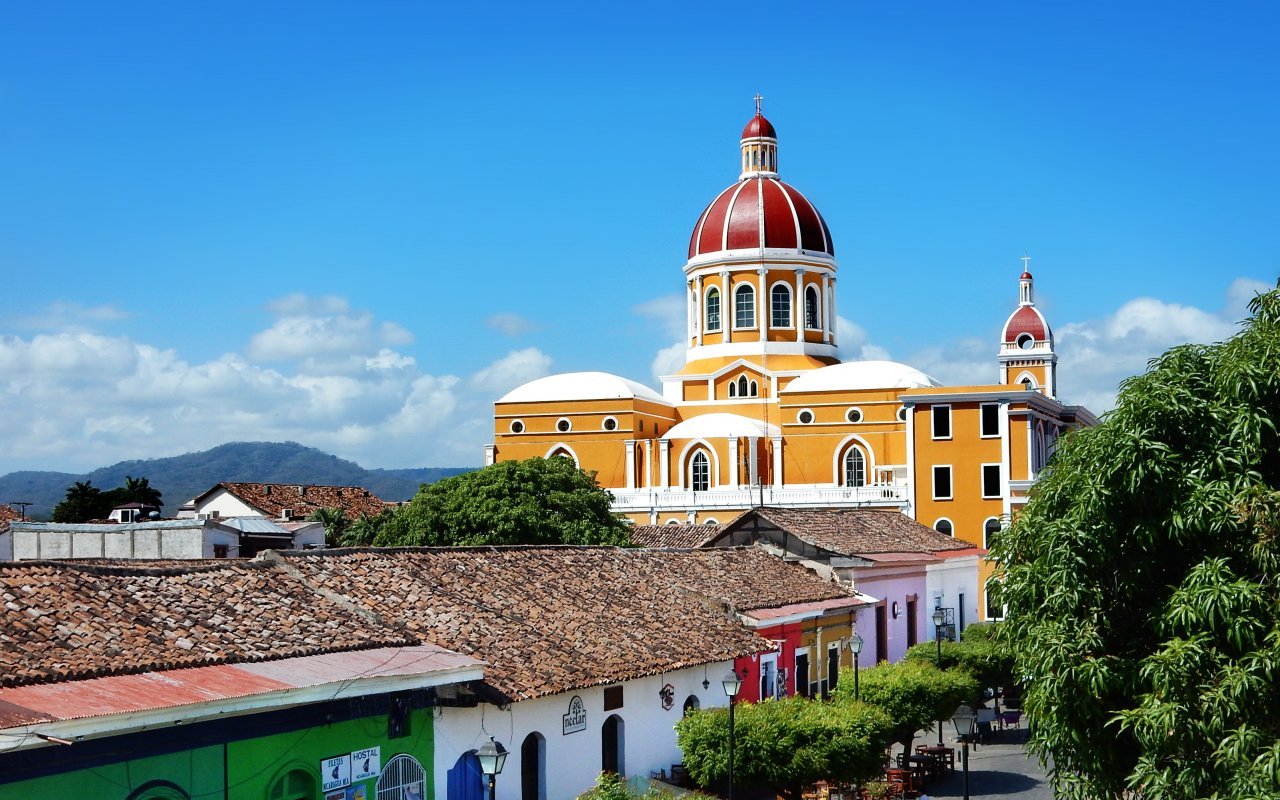
The lion and its revolution are not dead in Nicaragua. A pack of lions greets you at the entrance to the city, on the south side towards Managua. You’ll have understood the Spanish translation of the word lion. Two of their companions watch over the front steps of the village church. The enormous Cathedral de la Asunción can be seen as soon as you arrive in town, on the way down and then up to the market. I lived in León for over a year. A block and a half of houses below the supermarket. A strange address, I’m sure you’ll agree. As you can imagine, we never received any letters or parcels. It’s a vibrant student city, colonial and bustling. The capital of the revolution. To tell you the truth, you quickly feel at home here. It’s warm, not very touristy yet, and the local population is rather young and welcoming. The golden age of tourism in 2017 gave us a foretaste of the potential, with initiatives and other very pleasant projects in this city which, despite its stifling atmosphere, is indeed dynamic and explosive.


A former stronghold of the Sandinista revolution of the local seventies, rather violent and far from peace and love, this city could be a place of pilgrimage for some. For it was here that the movement and future national party (known to all) set up a new government after Somoza fled. It’s the FSLN. The red and black. Here, the word was given to the people. By the way, in reference to the junta’s colors, didn’t Stendhal say that speech was given to man to hide his thoughts? All this to emphasize the historical side of one of my favorite cities. As for the mystical and religious, there’s plenty to see and do in León, where there are more than a dozen churches. Not to mention the many religious processions that take place in this holy city. Candles, songs, parades and cheap booze often make for good entertainment and professions of faith.


There’s a warm atmosphere here, a smell of gunpowder perhaps, and the frescoes and other colorful facades in the colors of the Sandinista National Liberation Front, where some of the faces and profiles of the movement’s great martyrs proudly take pride of place, give the town a very colorful ambience. Numerous electric wires and other illegal connections fly over the high, narrow sidewalks you’ll be walking along. These pedestrian walkways are curiously high, so watch your step. As you can imagine, real torrents flow here during the rainy season. You’ll then come across a host of stores and stalls, mainly selling food – it’s important to eat well here. Getting lost in the cuadras, between the blocks of houses, and criss-crossing the long, one-way streets that truly criss-cross the city is a real pleasure and a hot ride. The heavy gates and doorways of the colonial houses often open onto real surprises, huge spaces with trees and flowers, surrounded by rooms, patios and secrets. Each house has its own history, its own family, from the modest to the more sophisticated, and a visit to León that’s too short will leave you with nothing but regrets – it deserves a few days and a few surprise encounters. On your way out, you’ll come across the eyes and teeth of the lions at the town’s main entrance one last time. A glance to the right, a field and two teams – I’ll let you guess the name of the baseball team (defending champions) of this beautiful and splendid capital of the revolution.

Plan your next trip to Nicaragua!